Industrial Grade Protection
Built Up Roofing in Austin, Texas
Built Up Roofing System (BUR) is one of the popular options when it comes to commercial and industrial buildings with flat roofs. Built-Up Roofing (BUR) system, is known for its durability and longevit
What is a Built-Up Roofing System?
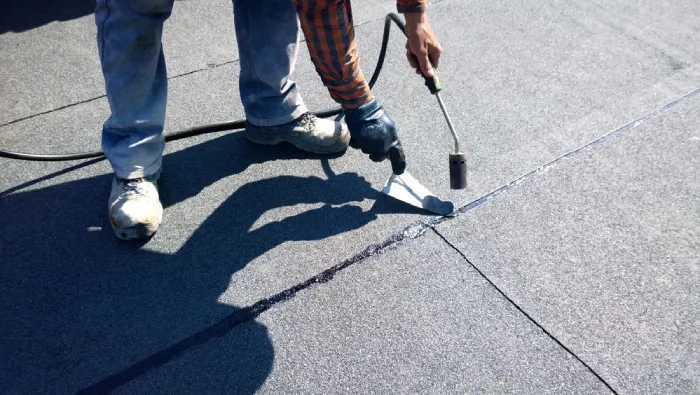
A built-up roof, or BUR, is a roofing system for flat or low-sloped roofs. It combines several layers of material built on top of each other. Built-up roofs are made from at least three materials: ply sheets, layers of bitumen or asphalt, and a surfacing material like stone or gravel. The modern BUR’s base is thick roof insulation with a cover board. On top of the board are alternating layers of bitumen and ply sheets, such as roof felt. The bitumen can be “cold,” which means an adhesive application, or “hot” applied with a torch. The top layer is a surface material such as small stones or gravel. Some BURs, especially in commercial spaces, have a UV layer under them for heat resistance.
BUR systems can be installed on a wide range of buildings, including commercial and industrial.
BUR systems are a durable and long-lasting option for flat roofs industrial and residential.
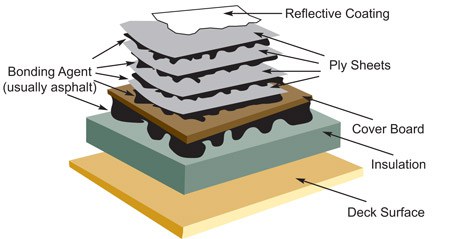
How Does it Works?
What Are the Different Types of Built-Up Roofing?
Hot Built Up Roofing
The term “hot” refers to how the layers are installed. The asphalt layers are heated, so they liquefy and form a bond with the felt layers. In general, though, hot built-up roofing doesn’t perform as well as cold built-up roofing in extreme weather. The installation is generally more complex and weather-dependent.
Cold Built Up Roofing
With cold built-up roofing insulation, the asphalt layers are bonded with the felt layers with an adhesive. As a result, cold built-up roofing is more weather-resistant than hot built-up roofing, and there are no toxic fumes to worry about. Cold installation can also be done in virtually any weather, provided it’s not raining or snowing.
Ballasted Roofing
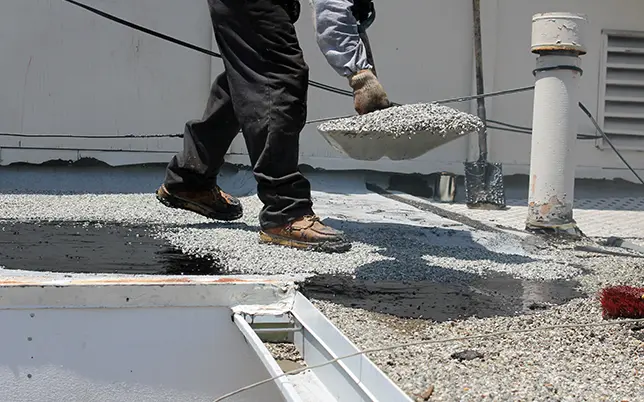
Ballasted built-up roofing is not installed using heat or any adhesive. Instead, the layers of asphalt and felt are kept in place with a top layer of heavy stones. The top-layer stones can be up to 2 inches in diameter and provide enough weight to keep all the layers in place.